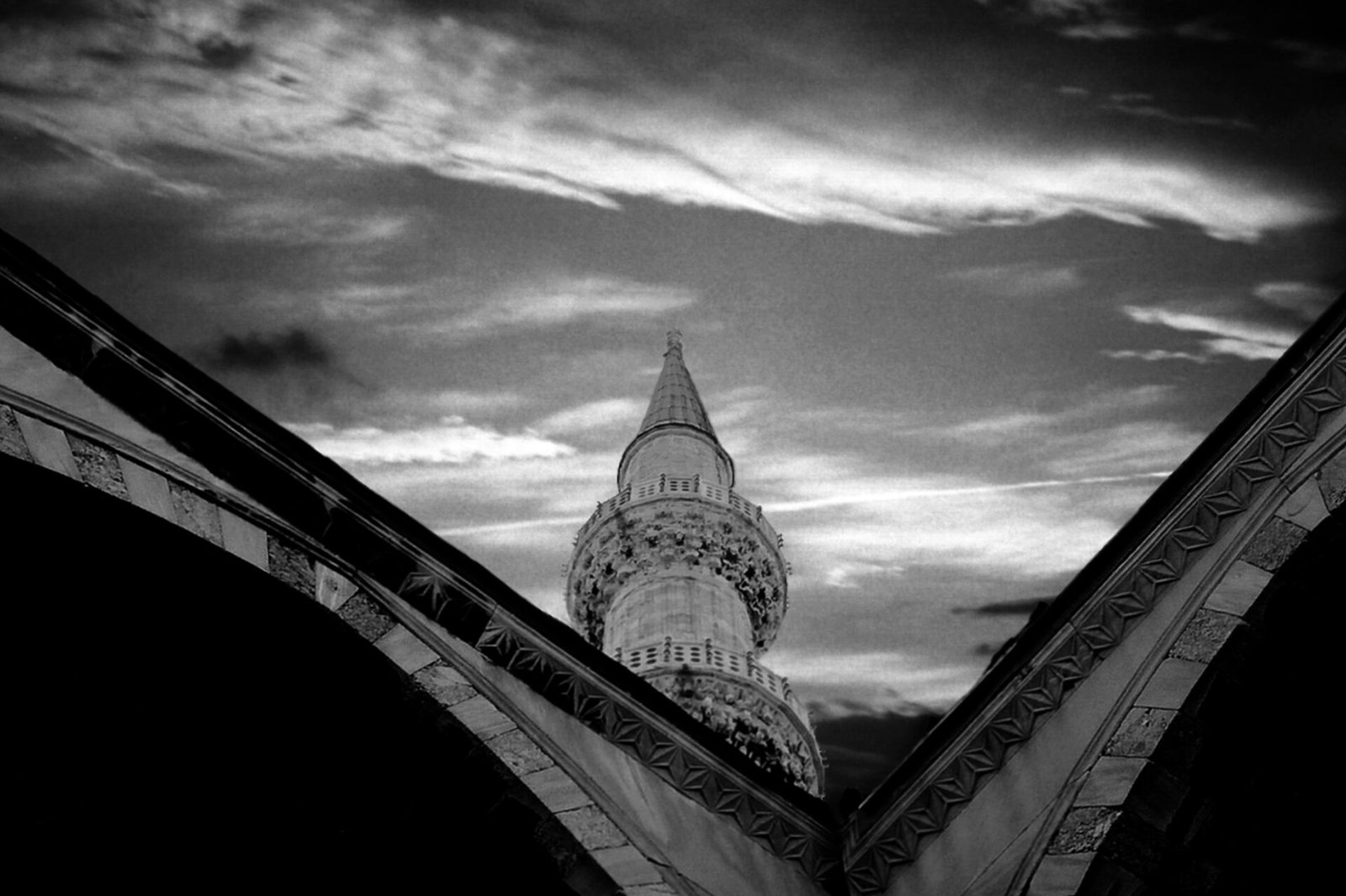
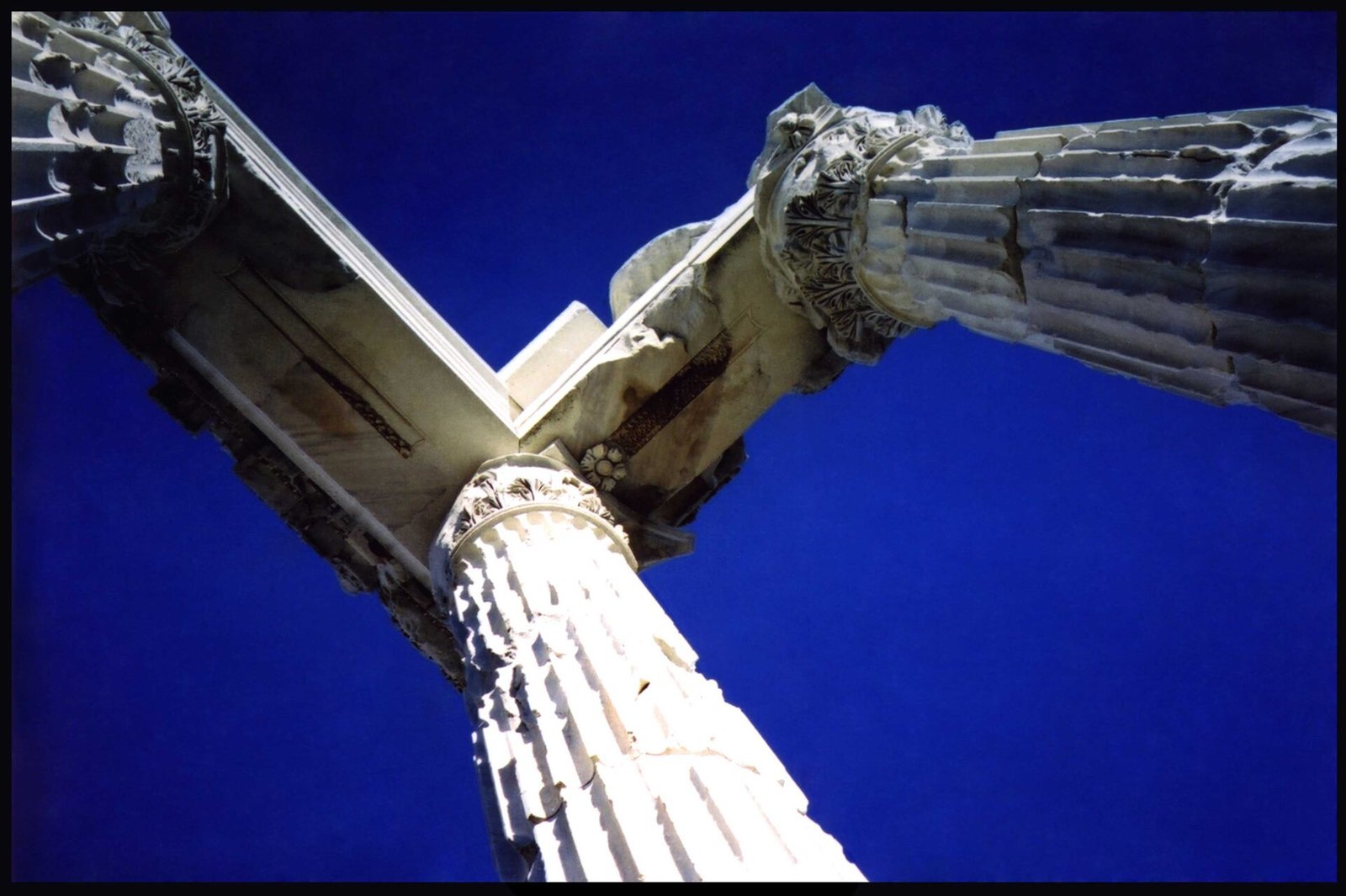
Ruins as witnesses to a time when humanity understood itself as part of a larger order.
landscape cycle 2002–2003
The Ancient World Series approaches ruins not as remnants of collapse, but as intact carriers of memory. These photographs do not document what has been lost; they examine what continues to stand — silently, patiently — after human certainty has withdrawn.
Working with analog film between 2002 and 2003, Milan Stamenovic treats ancient architecture as a form of ethical structure. Columns, towers, and fractured sanctuaries appear not as archaeological artefacts, but as thinking presences — shaped by time, erosion, and restraint rather than conquest or speed. Their endurance reveals a relationship to the world governed by proportion, ritual, and belonging rather than extraction or domination.
In these images, solitude is not emptiness. It is evidence. The absence of human figures sharpens the presence of time itself, exposing the fragility of modern acceleration when measured against civilisations that understood duration as wisdom. Nature does not reclaim these structures violently; it remains alongside them, honouring an earlier balance between human intention and the forces that exceed it.
Rather than nostalgia, The Ancient World Series proposes responsibility. It invites the viewer to read history not as chronology, but as architecture — a built reflection of how humanity once located itself within the cosmos, and how far it has since drifted.